


University Group Transport in Iceland: How to Plan It


Moving a university group around Iceland works best with a private minibus or coach and a local driver. That applies to field trips, study tours, conference delegations and exchange cohorts. Public buses reach most of the country, but their schedules and routes rarely fit a group of 15 to 50 people with luggage, a lecture slot to hit and a fixed return flight. This guide explains how to choose the vehicle, what to settle before you request a quote, and which safety checks matter in a country where the weather sets the pace.
TL;DR
Public buses cover most of Iceland, but sparse schedules and limited routes make them a poor fit for groups that need set times, several stops or remote sites.
Choose the vehicle by headcount plus luggage, not headcount alone. Minibuses suit smaller cohorts and narrow access roads. Coaches suit larger groups on main routes.
Pricing depends on group size, route length, trip duration, season and extras. Send a full brief to get a firm quote.
Build weather slack into every itinerary and check road conditions on Safetravel and the Icelandic Met Office each morning.
We quote each university trip privately. Tell us your dates, numbers and route and we will design the plan around them.
Table of Contents
What transport options exist for groups in Iceland
Iceland offers four broad ways to move people: public buses, privately operated bus services and guided tours, ferries, and domestic flights. The Icelandic Road and Coastal Administration lists these options and notes that almost the whole country can be reached from Reykjavík by public bus, apart from certain settlements in the northeast.
That sounds reassuring, and for one or two independent travelers it often is. For a university group the picture changes. Visit Iceland advises visitors to plan ahead in winter and to pay attention to the different summer and winter bus schedules. A timetable that works in July may not exist in January.
For groups, the realistic options are:
Public buses. Cheapest on paper, but you share space with other passengers, you cannot hold a bus for a late seminar, and luggage space is limited.
Seat-in-coach day tours. Fine for a free afternoon, but you follow someone else’s itinerary and stops.
Private minibus or coach with a driver. One vehicle, your schedule, your stops, and a driver who knows the roads.
Domestic flights and ferries. Useful for specific legs, such as reaching an island or the north, but they still need ground transport at each end.
When a university group needs a private bus
A private vehicle becomes the sensible choice as soon as any of these is true:
You have a fixed program. A guest lecture in Reykjavík at 14:00, a geology site visit at 10:00 and a dinner reservation cannot hang on a timetable that runs a few times a day.
You visit remote or multi-stop locations. Public routes tend to skip the places researchers and students most want to see, such as lava fields, glacier viewpoints, geothermal areas and small fishing villages. Highland areas are often excluded altogether.
You carry equipment. Field kits, sampling gear, laptops, camera cases and large suitcases need real storage space.
You must stay together. A group of 30 splitting across two public buses is a headcount problem you do not want on day three.
Someone needs accessible transport. Planning this in advance with a private operator is far easier than improvising at a bus stop.
If you are still weighing the two vehicle types, our comparison of minibus hire versus coach hire for groups walks through seat counts, comfort and road suitability.
Choosing between a minibus and a coach
The right vehicle is a function of three numbers: people, bags and the roads you will use.
Factor | Minibus | Coach |
Typical use | Small cohorts, research teams, delegations | Large cohorts, whole-department trips, conferences |
Access | Easier on narrow or smaller roads and in town centers | Best on main roads and for fixed hubs |
Luggage | Limited, so confirm space for bags and kit | More hold space per person |
Flexibility | Easy to split into two vehicles for parallel activities | One vehicle keeps a large group together |
Comfort on long legs | Good for short and medium days | Better for long transfers with a full group |
A practical rule: count the passengers, then count the large suitcases and equipment cases, then ask the operator whether both fit in the vehicle you have in mind. Many groups find that a cohort which technically fits a minibus by seats does not fit once the luggage is loaded. Our fleet page shows the range from small vans to large coaches.
Airport transfers for arriving and departing cohorts
Most university groups touch Iceland at Keflavík Airport, and arrival day is where plans most often slip. Flights land in waves, students collect luggage at different speeds, and a driver who tracks the flight can wait without penalty to the group’s schedule.
Things to settle in advance:
Flight numbers and arrival times for every sub-group, so the driver can adjust if a flight is late.
A meeting point and a named contact with a working phone, since staff are often among the first through arrivals.
Luggage count. Instruments, posters and lab equipment count too.
Where the group is going. Hotel, campus guesthouse or straight to a site visit each changes the plan.
The return leg. Check-out time, the airport check-in window and the road forecast for departure morning.
If you want the detail for larger arrivals, our guides on airport transfers for groups and Reykjavik airport group transfer options cover how these work in practice.
Moving between destinations: building a realistic itinerary
Academic itineraries tend to be ambitious. Iceland rewards a slower plan. Distances look short on a map, but driving days include photo stops, weather delays, fuel and rest breaks for the driver, and the time it takes to load a bus with 40 people.
A few habits make a university itinerary hold together:
Fewer bases. Two or three overnight locations beat one new hotel every night.
Anchor the fixed appointments first. Lectures, lab visits and permit-dependent site access go in before the sightseeing.
Leave a buffer day or half day. Winter groups especially should treat this as non-negotiable.
Put the longest drive on a day with no fixed engagement at the end.
Keep the route on marked roads. Off-road driving is strictly prohibited to protect the fragile landscape, so remote field sites need a plan for the final approach, such as a short walk from a legal parking area.
Our Outstation trip and custom itinerary service exists for exactly this: a route drawn around your program rather than a standard tour.
What affects the cost of group transport
There is no single price for university group transport in Iceland, and we do not publish fixed rates because each trip is quoted privately. What drives the figure is predictable, though, so you can compare quotes on equal terms.
Group size and vehicle type. A minibus and a coach are priced differently.
Distance and number of days. A single transfer, a day trip and a ten-day circuit are different jobs.
Season. Summer demand is high and winter conditions add planning needs.
Waiting time and split schedules. Dropping a group at a site for six hours is not the same as a continuous drive.
Overnights. If the driver stays with the group away from base, that affects the quote.
Extras. Guiding, accessibility needs, special stops and early or late starts.
A fair comparison needs the same brief sent to every operator. If one quote includes waiting time and another does not, the cheaper number may simply be the incomplete one.
What to check before you book
University trips usually involve a coordinator who answers to a department, a travel office or a finance team. This checklist helps you collect what an operator needs and what your institution will ask you later.
Group size and seat count
Give the real number, including staff, guides and guest speakers. Ask what happens if the number changes by a few people before departure.
Luggage and equipment
List large suitcases, field gear, musical instruments, posters and anything oversized. Ask for confirmation that the vehicle’s storage fits it.

Accessibility
If anyone uses a wheelchair, has limited mobility or needs extra boarding time, say so in the first message. This affects the vehicle choice and the schedule.
Booking terms
Ask how the booking is confirmed, what the payment schedule looks like, how to amend names or numbers, and what happens if a flight is cancelled or weather forces a change. Get it in writing, since your finance office will want it.
Driver and schedule
Ask how the schedule accommodates the driver’s working hours on long days. A realistic plan protects both the group and the driver.
Invoice details
Give the institution’s legal name and billing contact up front so the paperwork matches your purchasing rules.
Weather, roads and safety for student groups
Icelandic weather shifts quickly. Visit Iceland notes that bad winter weather can cause temporary local road closures and recommends the Safetravel conditions map, which shows closures, wind speed, traffic and webcams. The Safetravel app handles alerts. Safetravel is run by ICE-SAR, and according to the Icelandic Meteorological Office it provides safety information, the 112 Iceland app and the option to leave a travel plan.
Closures are real. On 26 September 2025 flooding and bad weather led the authorities to close a stretch of Route 1 east of Höfn until at least the next morning. A group with a rigid schedule on that road would have had no good options. A group with a spare half day would have simply moved lunch.
A daily routine for the group leader:
Check the forecast on the Icelandic Meteorological Office site, vedur.is, with attention to wind, snowfall and storm alerts, as Visit Iceland encourages.
Check the Safetravel conditions map before the bus leaves.
Talk to the driver. Local drivers read conditions faster than any app and have the authority to change the plan.
For road questions, the 1777 service operates daily from 06:30 to 22:00 and answers traveler inquiries year-round.
Make sure every student has working mobile data for alerts. An Iceland eSIM data plan is a simple way to stay connected on arrival, without hunting for a local SIM at the airport.
For a deeper look at seasonal closures, read when Iceland roads close.
Our perspective on university group trips
We move groups across Iceland, and university trips teach us the same lesson every time: the transport is not the main event, but it can quietly ruin the main event. A late bus means a missed lecture. A bus too small means bags left behind. A rigid schedule on a stormy day means a tired, cold group.
So we start with the program, not the vehicle. We ask what must happen on which day, then build the route around it, choosing a vehicle from our range of small vans to large coaches. We build slack in, because Icelandic weather does not read itineraries. And we like to know who the group coordinator is early, because a single clear contact on each side solves most problems before they begin.
What we would tell any coordinator: send the full brief, including luggage and accessibility needs, ask for the same details from everyone you compare, and keep one flexible half day in the plan.
— Malik
Request transport for your group
We provide bus and minibus rental with drivers for private tours, day trips, airport transfers and group transport, plus custom itinerary planning. For universities that means one point of contact for arrival, field days and departure. Tell us your dates, headcount, luggage and route and we will come back with a private quote through our group transport service.
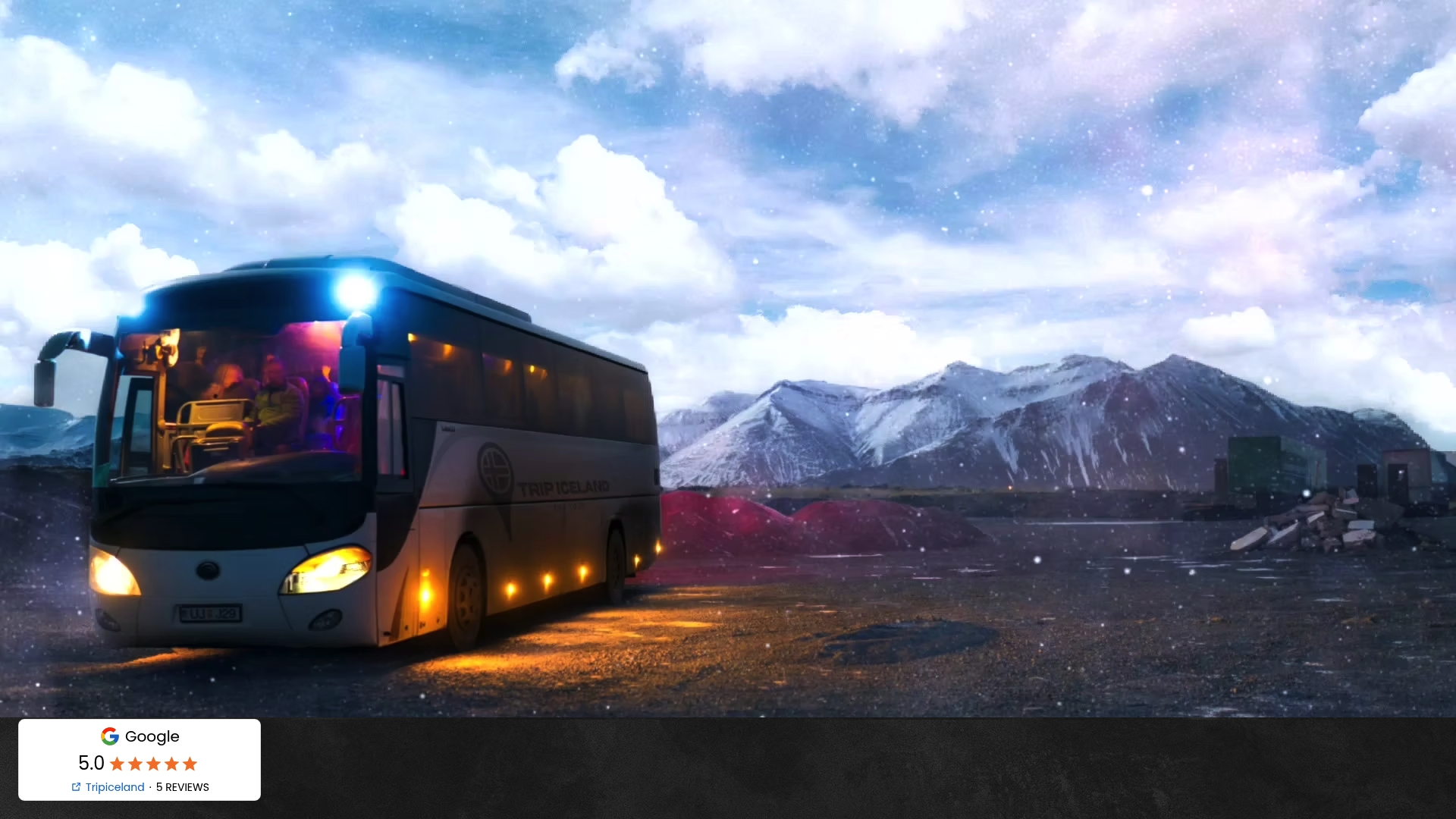
If you want to read more first, our guide to booking Iceland coach transport for your group covers the process step by step, and bus rental in Iceland for groups and tours explains how rentals with a driver work.
FAQ
Can a university group rely on public buses in Iceland?
Sometimes, for small groups with flexible plans. Public buses reach most of the country, but schedules differ between summer and winter and routes are limited. For a group with fixed appointments, remote sites or heavy luggage, a private vehicle is far more dependable.
How far ahead should we book?
As early as your dates are known, particularly for summer and for large groups. Early contact lets the operator match the vehicle to your headcount and plan the route. Send flight details and the full itinerary as soon as you have them.
Do you offer a fixed price per student?
No. We quote each trip privately, because the price depends on vehicle, distance, duration, season and extras. Send us the brief and we will respond with a quote for your specific trip.
What if the weather changes our plans?
Your driver and the group leader adjust the route using the Safetravel conditions map and the Icelandic Met Office forecast. This is why we suggest a buffer half day, especially in winter. If a road closes, a spare day turns a crisis into a rearranged lunch.
Can the same bus handle the airport and the field days?
Often yes, for groups of one size and a continuous schedule. If your group splits, or you need a small vehicle for a narrow road and a larger one for the airport, we can plan both. Tell us the plan and we will advise on the best match.
Sources
Recommended

Comments