


Reykjavík City Shuttle Loop Planning for Groups


A good Reykjavík shuttle loop is a short, repeating circuit of three to six stops. It uses official pickup points, leaves time for boarding and ties in with the public buses your guests may also use. For groups, the easiest way to run it is a private minibus or coach with a driver on a fixed timetable. We build that kind of loop for travel agents, event organizers, corporate planners and families, and this guide shows how to design one yourself first.
TL;DR
Build the loop around official city-centre pickup and drop-off points, not around wherever the vehicle can stop on the day.
Keep it to a handful of stops, ordered so the vehicle never doubles back, and test the full circuit with a realistic dwell time at each stop.
Check Strætó, the capital-area public bus operator, for timetables, disruptions and fares before you promise guests a connection.
Plan group size, luggage, accessibility and weather first: they decide the vehicle, not the other way round.
For a fixed-hours loop, a private bus or minibus with a driver gives you control over frequency and capacity.
Table of Contents
What a city shuttle loop is, and who needs one
A loop is a route that starts and ends at the same point and passes the same stops in the same order, over and over, during set hours. In Reykjavík it makes sense in four situations:
Conferences and corporate events, where delegates move between hotels, a venue and a dinner location. We cover that case in detail in our conference shuttle planning guide for Reykjavík.
Cruise and tour groups with a few free hours in the city who need to reach the main sights and return to a meeting point.
Weddings, parties and private events with guests spread across several hotels.
Families and friends traveling together who want one vehicle for a day of city sightseeing, without parking or navigation.
The reader who benefits most is the coordinator: the travel agent, the event planner or the person in the family who organizes everyone else. Your job is to make the route predictable, so guests never wonder where the vehicle is or when it returns.
Step 1: Choose stops that vehicles can actually use
The most common mistake in city shuttle planning is picking stops by attraction and then discovering that a large vehicle cannot stop there. In central Reykjavík, the city publishes an official portal, busstop.is, with locations, photographs and a map of the designated pickup and drop-off points for tour buses and airport shuttles. Start there. Build your route from those points where you can, and choose the nearest official point for anything else.
A workable stop list for a visitor loop usually covers:
A hub stop near the hotels or the venue where most guests start the day.
The main sightseeing area of the city center, where guests will want to walk on their own.
The harbor area, which is the natural link for cruise passengers and for anyone going to the old harbor’s restaurants and museums.
One optional outlying stop, such as a museum, pool or event venue, only if the group really needs it.
Every extra stop lengthens the circuit and cuts frequency. Three to five stops is plenty for most groups. If guests ask for a sixth, ask what the first five are not giving them.
Write down each stop as a card
For each stop, record the exact street location from the official map, a photo guests can recognize, what the stop is for (“boarding for Harpa and the old harbor”), and a landmark to meet at. Hand these to the group in the language they read. Italian groups in particular tend to appreciate a one-page printed map with the stop letters, because mobile data abroad is not always switched on.
Step 2: Sequence the route and time the circuit
Order the stops so the vehicle moves in one direction around the center, never crossing back over its own route. Then time it in three parts:
Driving time between each pair of stops, measured at the hour you will really operate. A drive that is quick at 7 a.m. is slower at midday when streets near the center fill up.
Dwell time at each stop: the time to stop, open the doors, board, count heads and pull away. Groups with luggage, strollers or wheelchair users need more than groups with day bags.
Buffer at the end of the circuit, so a late departure does not carry into the next lap.
A simple rule: add up driving and dwell times for one full lap, add a buffer of roughly 10 to 15 percent, and publish departures at a clean interval, such as every 30 or 45 minutes. Guests remember “on the hour and at half past” far more easily than irregular times.
A worked example
Imagine a 40-person group from a Milan travel agency with one free afternoon in the city. You choose four stops: the hotel area, the main sightseeing area, the harbor and a return to the hotel area. With one 49-seat vehicle and a lap of about 30 minutes including dwell time, you publish departures every 30 minutes from 1 p.m. to 6 p.m. Because the whole group can board in one go, you never have to split guests across laps. If the group grows to 70, you move to two vehicles on the same route or one larger coach, and you shift departures to stagger them. This is the capacity question to settle before anything else.

Step 3: Connect the loop with public transport
A private loop does not need to replace the city buses. Some guests will want to go further than your route does, and a connection to the public network is a useful fallback if a lap runs late.
Strætó’s official route system page describes a capital-area network of 29 routes, planned by the municipalities together with Strætó. It says routes 1, 3, 5, 6 and 12 normally run every 10 minutes at peak, every 15 minutes between the weekday peaks and every 30 minutes outside those periods. These are the routes that make the best backup links for a central loop.
To see where your stops meet the network, use Strætó’s timetable index. It lists, for example, route 3 between Grandi and Mjódd and route 14 between Grandi and Verzló, which helps near the harbor, and routes 1, 4, 16 and 17 serving Skúlagata termini. The same page shows route 6 between Háskóli Íslands and Egilshöll. The index tells you which routes exist, but you must check stop-by-stop service in the live timetable before you tell guests which bus to take.
If you want to compare your schedule against the public one properly, Strætó’s open data page says its GTFS data includes stop locations, route lines and arrival and departure times for each stop on every day. A technically minded planner can load this into a mapping tool; most groups only need the route planner.

Check service status on the day
Weather and roadworks can change public service. Strætó’s route planner links to timetables, advance-order services, trip status and disruptions, and identifies route 55 as the connection to Keflavík airport. Make checking it part of the morning routine for the group leader. The same habit applies to any shuttle you run: the principles in this guide to shuttle planning for organizers about confirming current service status and timetable changes before the first departure carry over to a city loop.
Step 4: Know the fares if guests use buses too
If your plan lets guests hop onto a city bus when your loop is not running, give them the fares in advance so no one is surprised. Strætó’s fare-change notice of December 30, 2025 sets the capital-area fares effective January 6, 2026 at:
Fare | Price (ISK) |
Adult single | 690 |
Youth and senior single | 345 |
Disabled passenger single | 207 |
Children aged 11 and under | Free |
The same notice lists 30-day fares of ISK 11,600 for adults, ISK 5,800 for youth, seniors and students aged 18 and over, and ISK 3,480 for disabled passengers. A 30-day pass rarely suits a short city visit, so for most groups the single fare is the relevant figure. Fares are reviewed periodically, so check the Strætó price list before you print anything for guests.
Step 5: Plan for the people, not just the route
The route is the easy part. What breaks a loop is a mismatch between the vehicle and the group. Go through this list before you confirm anything.
Group size and vehicle. Count everyone, including the guide, the organizer and children. Seats should match the group with a little room to spare, because a vehicle that is exactly full has no flexibility for late additions. Our vehicles range from small vans to large coaches, and you can see the options on our fleet page.
Luggage. A loop for guests with day bags is a different job from a hotel-to-venue transfer with suitcases. If luggage is involved, tell us when you ask for a quote, because it changes dwell time and vehicle choice.
Accessibility. Ask the group leader early whether anyone uses a wheelchair, walker or stroller, or needs extra time to board. Build that time into the dwell figure and pick stops where the vehicle can pull in close to the curb.
Boarding discipline. Give the group one rule: be at the stop five minutes before departure. A guide or organizer who counts guests on board at each stop saves the whole schedule.
Weather and season. Iceland’s weather can change within a day, and winter brings short daylight hours. In winter, shorten the loop or the walking portions, give guests a waiting place indoors near the main stop, and keep the last departure well ahead of dark if sightseeing is the purpose. In summer, longer daylight lets you run later loops, but central streets are busier, so allow more driving time.
Hours and overtime. A loop with fixed hours means a driver on the clock for that period. If your event runs late, extra time can add cost, so read our note on overtime charges for bus hire in Iceland before you set the final departure time.
Planning the arrival and departure legs
Most groups need a transfer before and after the loop. The arrival from Keflavík and the return at the end are separate pieces of the plan, and they are best booked together with the loop so the same driver and vehicle details stay consistent. Our guide to group airport transfer options in Reykjavík covers that leg, and the private transfer guide helps for smaller parties. Cruise groups with a few hours in port can also look at our Reykjavík bus excursions of 4 or 10 hours.
How we approach a city loop
We plan city loops from the stop cards first and the vehicle second. A group rarely needs more than a few well-chosen stops, and the best loops are the ones where nobody has to ask the driver what happens next. Our business is bus and minibus rental with drivers, from small vans to large coaches, along with custom itinerary planning. That matters for a loop, because the route, the hours and the vehicle size are all decisions that depend on each other. When you talk to us about the group size, the stops you have in mind and the hours you want to run, we can shape all three together instead of fitting your plan to a fixed product. Our aim is reliable and flexible transport that keeps the day stress-free for the person who organizes it. For travel agents, corporate clients and event planners, that means one point of contact for the whole plan and a driver with local knowledge of Reykjavík. Malik
Booking a private loop with Tripiceland
If you want a fixed-hours circuit for your group, we provide bus and minibus rental with drivers, custom tour packages and event shuttle service in Iceland. Tell us the group size, the stops, the hours and any luggage or accessibility needs, and we will plan the loop with you.
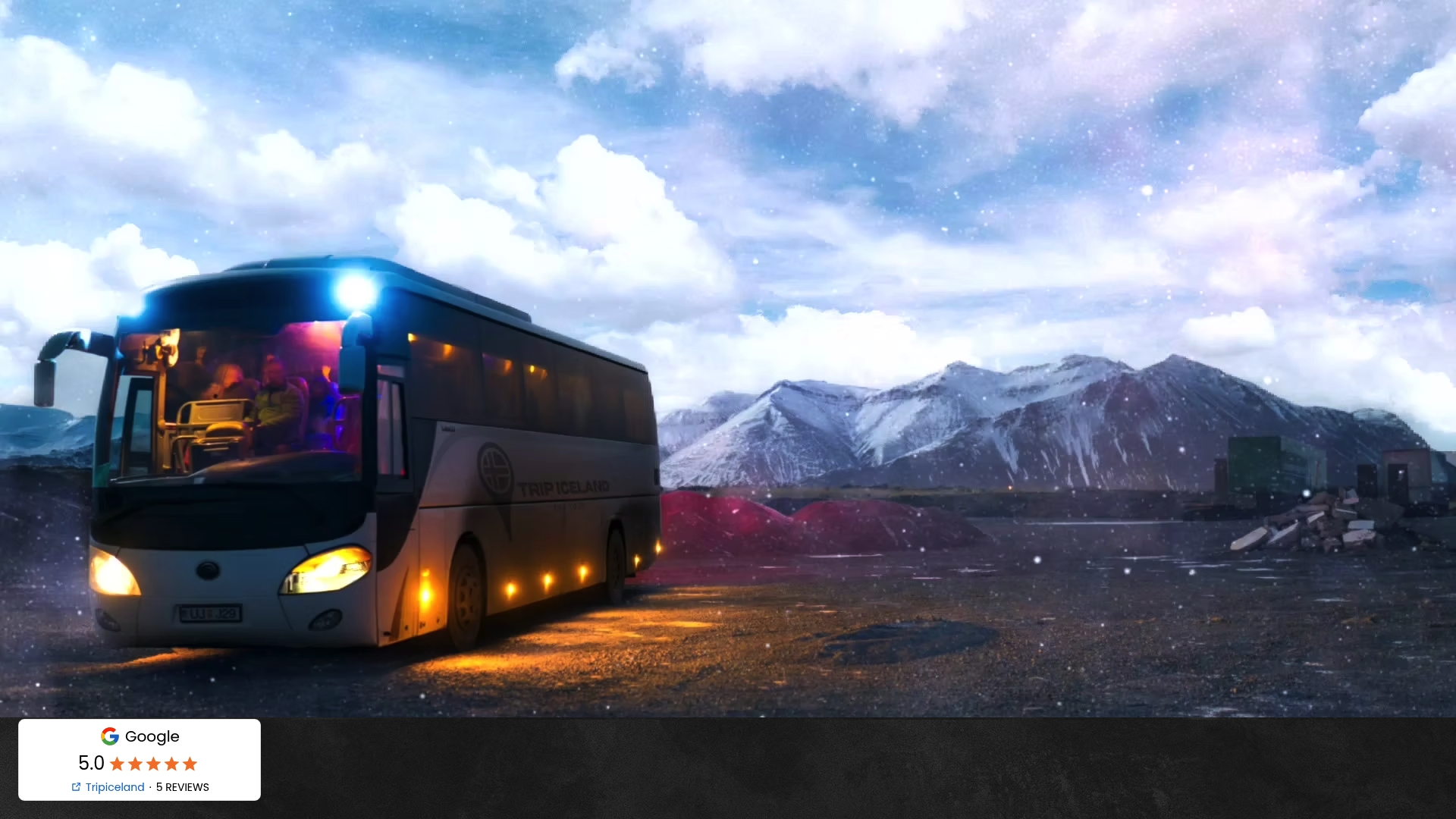
Start with our bus rental service for groups in Reykjavík or go straight to the Tripiceland home page to send an enquiry. Pricing is given as a private quote, so include as many details as you can in your first message.
FAQ
How many stops should a Reykjavík shuttle loop have?
Three to five is a good range for most groups. More stops lengthen the circuit and reduce how often the vehicle returns to each one. If guests want a place that is off the route, add it as an occasional extension rather than a permanent stop.
Where can a tour bus or shuttle stop in central Reykjavík?
The City of Reykjavík publishes a portal called busstop.is with photos and a map of official pickup and drop-off points for tour buses and airport shuttles. Use those locations in your plan and on the guest handout, so the driver and the group meet at the same place.
Can guests use the city buses as a backup?
Yes. The Strætó network runs 29 routes in the capital area, and its route planner shows trip status and disruptions. An adult single fare was set at ISK 690 from January 6, 2026, and children aged 11 and under travel free, according to the fare notice. Check the live timetable on the day.
How far ahead should I book a private shuttle for a group?
Book as soon as the dates and group size are fixed, especially for peak summer periods and large events, when coaches are in demand. Send us the size of the group, the planned stops and the hours, and we will return a private quote.
Sources
Recommended

Comments