
_ed.png)


_ed.png)
Corporate Group Logistics in Iceland: Verify Safety Plans First


The fastest way to secure safe, compliant group transport in Iceland is to hire an experienced local coach or minibus operator that works from a documented, Iceland-specific safety plan. Before you request quotes, prepare a route- and season-specific risk assessment and confirm the right vehicle class for your group size and luggage. Tripiceland is a practical option to contact for fleet details and a tailored quote.
TL;DR:
Icelandic tour operators must maintain written safety plans tailored to each route and season, in English and Icelandic, covering contingencies and incident reporting.
Organizers outside the EEA must contract a licensed Icelandic operator for small passenger vehicles, while EEA operators may provide occasional services under a community license.
Check Vegagerðin’s traffic center or call 1777 daily during active tours, register a Safetravel plan, and set clear rules for postponing tours due to weather.
Match vehicle class to passenger count and luggage, since vans suit small groups, minibuses suit medium groups, and coaches carry larger parties or heavier baggage.
Book charters lasting several days well ahead for peak summer, and expect highland routes, remote destinations, and driver accommodation to raise costs.
Table of Contents
Planning checklist from first inquiry to confirmed booking
Arranging transport for a corporate group in Iceland works best as a sequence, not a scramble. Each step feeds the next, and skipping one usually shows up later as a scheduling or compliance problem.
Define the trip purpose and itinerary: airport transfers, single-day sightseeing, or a multi-day charter across regions.
Collect group details, including passenger counts, luggage volume, accessibility needs, and language preferences.
Decide whether one vehicle covers the group or whether a split fleet is more efficient for the route and stops.
Set booking milestones: initial inquiry, provisional hold, signed contract with safety and contingency clauses, then a final manifest and payment terms.
Prepare a written trip travel plan and share emergency contact details with the operator before departure.
Travel agents juggling several clients at once benefit from treating each of these as a checkpoint rather than a single long conversation. A provisional hold on a vehicle, for instance, protects your dates while you finalize headcounts, and a written manifest avoids last-minute disputes over passenger numbers or luggage space. Our guide to organizing group transport in Iceland walks through this sequence in more detail for planners coordinating multiple stakeholders.
Legal and safety requirements every organizer should verify
Icelandic authorities treat tour safety as a documented obligation, not a courtesy. The Icelandic Tourist Board requires travel agents and tour operators to compile written, route- and season-specific safety plans that include contingency procedures and incident reporting, available in both English and Icelandic. A generic template does not satisfy this requirement: plans must reflect actual conditions and be updated as routes, group sizes, or seasons change.

The Icelandic Tourist Board can require corrective action when a submitted safety plan is inadequate, which makes early preparation a scheduling issue as much as a compliance one, according to the Icelandic Tourist Board.
A compliant plan, built around the coach-specific risk assessment checklist, typically covers:
Route hazards specific to the terrain, including narrow bridges, steep grades, or coastal exposure.
Seasonal conditions such as ice, snow accumulation, or reduced daylight.
Distance to third-party emergency assistance along the planned route.
Contingency plans, including when to postpone or reroute a tour.
Staff competency, including driver training and local-route familiarity.
Licensing adds another layer. Operators based in an EEA member state may perform occasional services in Iceland under a community licence, but non-EEA entities cannot be issued operating licences for small passenger vehicles in Iceland and must contract a licensed local operator instead. Before signing, ask any prospective operator for a written safety plan, driver competency statements, proof of vehicle technical compliance, and confirmation of on-board communications equipment.
Planning around winter weather and highland road conditions
Iceland’s road network changes character by season and by region, and a route that is routine in July can require a different plan in January. Vegagerðin (IRCA) manages winter service on many roads using prioritized clearing procedures and route-specific monitoring, but closures and ice can still appear with little warning.
Check Vegagerðin’s traffic center or call the 1777 service before departure each day during active tours.
Build extra transit time into any itinerary that includes gravel roads, highland routes, or single-lane bridges.
Register a detailed Safetravel travel plan with an emergency contact who is not on the trip.
Agree in advance how your operator will communicate delays to clients and when a tour gets postponed rather than pushed through.
Pro Tip: Treat every multi-day itinerary as a winter itinerary, even in shoulder season, since weather on highland and coastal routes can shift within hours.
Choosing the right vehicle and staffing for your group
Vehicle selection depends on headcount, luggage, and route difficulty more than on preference. Vans typically suit smaller groups, minibuses handle mid-size groups with moderate luggage, and full coaches cover larger corporate groups or multi-day charters with substantial baggage needs.
Match vehicle class to both passenger count and luggage volume, not headcount alone.
Prioritize drivers with documented local-route experience, especially for highland or winter itineraries.
Confirm on-board equipment: reliable telecommunications, a first aid kit, thermal blankets, and ice cleats for icy conditions.
Request the operator’s written rules on work procedures and contingency plans as part of your contract review.
Larger groups sometimes split across two smaller vehicles rather than one large coach, particularly when an itinerary includes stops with limited parking or narrow access roads. Our bus hire guide for tour groups breaks down capacity ranges and stowage planning in more detail for organizers comparing vehicle classes.
Booking lead times and what drives the final cost
Lead time varies by trip type. Airport transfers can often be arranged with advance notice, day tours need more lead time depending on season, and multi-day charters during high season should be booked well ahead to secure availability.
Confirm vehicle availability early, since fleet capacity tightens fastest in peak summer months.
Expect cost to shift with itinerary difficulty: highland routes, remote drop-offs, and driver accommodation all add to the quote.
Review cancellation terms, weather clauses, insurance coverage, and liability limits before signing.
Make the operator’s written safety plan part of your contractual acceptance criteria, not a side document.
Planners arranging winter transfers can find useful contingency thinking in resources built for similarly weather-dependent transport, such as this guide to safety checks before driving to a ski resort, which covers decision points that translate well to Icelandic winter routes.
What experience on Icelandic roads actually changes
Most logistics failures in group travel come from treating Iceland like a predictable market. It is not. Weather and road conditions shift faster here than in most of Europe, and an operator with extensive experience on a route reads changing conditions differently than one encountering them for the first time. That difference shows up in contingency response: rerouting before a closure hits, knowing which stops have real shelter if a storm rolls in, and building a realistic buffer into a schedule instead of an optimistic one. Fleet flexibility matters too. A corporate group that needs to swap a coach for smaller vehicles shortly before departure needs a provider who can actually make that call.
— Malik
Book group transport with Tripiceland
We provide bus and minibus rental with drivers for corporate shuttles, event transport, day tours, and custom multi-day itineraries across Iceland, with vehicle capacities ranging from small vans to full-size coaches.
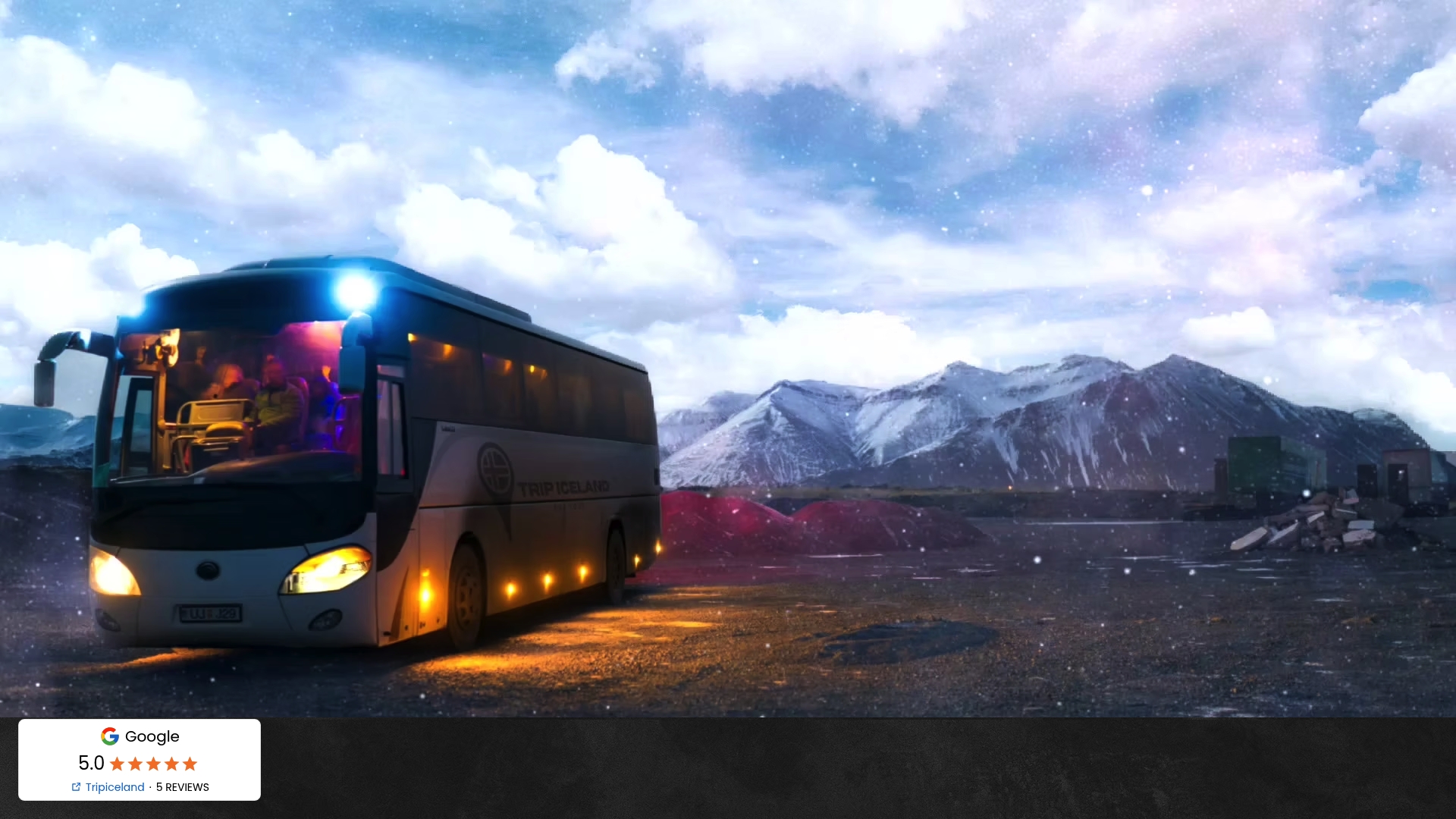
To get an accurate quote quickly, include your travel dates, passenger count, pickup and drop-off points, luggage volume, and any accessibility or special requirements in your inquiry. We work directly with travel agents, corporate clients, and event organizers to match the right vehicle and route to your group, and we can walk through safety-plan documentation as part of the booking conversation. Check available vehicle classes on our fleet page or start your request at Tripiceland.
FAQ
Do I need a written safety plan for a corporate group tour in Iceland?
Yes, organized tours in Iceland require a written, route- and season-specific safety plan with contingency and incident-reporting procedures, as set out by the Icelandic Tourist Board. The plan must be kept current and available in both English and Icelandic.
Can a foreign company operate its own vehicles for a tour in Iceland?
Operators based in an EEA member state may run occasional services under a community licence, but non-EEA companies cannot hold operating licences for small passenger vehicles in Iceland. Most foreign organizers contract a licensed local operator instead.
How far ahead should I book a coach for a corporate event in Iceland?
Day tours generally need advance planning depending on season, while multi-day charters during peak summer months are best booked well ahead. Airport transfers can usually be arranged with advance notice.
How do I check road and weather conditions before a tour departs?
Vegagerðin’s traffic center monitors roads and weather around the clock and publishes updates through its 1777 phone service and online tools. Checking this daily during an active tour helps you plan around closures or ice before they disrupt a schedule.
What should I include when requesting a quote for group transport?
Include your travel dates, passenger count, pickup and drop-off locations, luggage volume, and any accessibility needs so the operator can match the right vehicle class. Mentioning your itinerary type, whether sightseeing, airport transfer, or multi-day charter, also helps the provider confirm availability faster.
Sources
Recommended

Comments