


Film Crew Transport Planning in Iceland: A Production Guide


Good film crew transport in Iceland comes down to four decisions made before anyone lands: which roads your locations sit on, which permits control access to them, how the season changes both, and who drives the crew between sets. Get those right and the rest is scheduling. Get them wrong and a closed road, a permit delay or an overloaded vehicle costs you a shoot day.
This guide is for producers, line producers and production managers, including those based in Italy, planning a shoot on the island. It covers what to settle first, how to match vehicles to terrain, what the official sources say about permits and road access, and how to build a backup plan.
TL;DR
Map every location against Iceland’s road network first. Mountain F-roads are closed to ordinary rental cars and often stay shut until late June or early July.
Filming in protected areas needs a permit you apply for yourself, with processing of up to 15 working days (30 for Mývatn and Laxá). Build that into your prep schedule.
Plan the crew’s daily moves around daylight, weather warnings and live road data (call 1777 or check Road.is) rather than a fixed timetable.
Use one group vehicle with a professional driver for the crew and keep equipment logistics separate, with a named backup vehicle for every shoot day.
Send your transport provider the same details you give the permit authority: dates, locations, equipment, headcount and a map.
Table of Contents
What transport planning has to cover before you arrive
A transport plan for a shoot in Iceland is really five plans stitched together: arrivals and departures, the daily crew move, equipment movement, access to restricted locations, and contingency. Most productions underestimate the distances and the weather, not the vehicles.
Start with a location list in shooting order, not alphabetical order. For each location write down:
The road type that reaches it (paved ring road, gravel, F-road, or no road at all).
Whether it is a protected area, private land or public road, because that decides who grants permission.
The nearest place the crew vehicle can stop and how far people carry gear from there.
Daylight hours on your shoot dates, which change sharply between seasons.
A fallback location that sits on a different road and in a different weather pattern.
Then add headcount and gear volume. A crew of 12 with camera cases, grip and a drone kit moves very differently from a four-person documentary team. That difference drives your vehicle choice more than anything else.
Choosing vehicles and drivers for Iceland’s roads
The first rule is about terrain. According to the Icelandic Road and Coastal Administration’s travel information, ordinary rental cars are not allowed or insured on mountain roads marked F-roads. The Environment Agency of Iceland adds that driving off marked roads and tracks is strictly forbidden, and many narrow, steep gravel tracks suit only four-wheel-drive vehicles. So “we’ll just drive the van up there” is not a plan. Check each location’s access class before you commit to a call time.
Matching group size to vehicle
For moving people, the question is how many seats you need and how much cargo space. Our fleet runs from small vans to large coaches, and you can see the range on our fleet page. A rough way to think about it:
Crew situation | Sensible transport approach |
Small team, light kit | Van or minibus with a driver, kit inside |
Mid-size unit with cases and a drone kit | Minibus for people, a separate vehicle for equipment |
Large unit, extras, client and agency staff | Coach for the main move, minibuses for splits between locations |
If your group lands in the larger bracket, our 21 to 48 passenger vehicles are the ones to look at on the passenger capacity page and in our bus rental guide for groups that need to move.
Why a professional driver matters on a shoot
Film days run long, start before dawn and end after dark in winter. A driver who knows the roads, the fuel stops and the usual weather pockets lets the production team work during transit: reviewing call sheets, charging batteries, resting between setups. A driver also keeps your hours legal and your crew out of unfamiliar conditions. The Icelandic Road and Coastal Administration notes that winter driving can be dangerous for inexperienced drivers because of unpredictable weather, ice and limited daylight. Hiring a driver with local experience takes that risk off your department heads.
On driving rules, the same source gives the baseline: 90 km/h on highways outside urban areas, 80 km/h on gravel roads and 50 km/h in towns. Those limits are ceilings, not targets. Build your drive times on conservative averages, especially on gravel.

Insurance and licensing
Vehicles on Icelandic public roads need valid liability insurance. One Icelandic insurer’s policy terms state that mandatory vehicle insurance covers use in Iceland, other EEA states and Switzerland, and that the driver must be fit to drive and properly licensed. If crew members drive their own hired vehicles, ask your insurer and the rental company what exactly is covered for equipment and for work use. When a driver is part of the service, the licensing question sits with the transport provider and is simpler to document for your production file.
Seasons, weather and road closures
Iceland’s calendar decides which locations you can reach. Most mountain F-roads often do not open until late June or early July, and the authority keeps strict closure policies with heavy fines, because traffic on roads that are not ready damages them further. If your script lives in the highlands, shooting in spring or autumn can mean a different location or a different shoot window.
For a deeper look at the pattern, our article on when Iceland’s roads close walks through how to plan around it, and our piece on winter excursions for every group covers cold-season movement.
Reading the warnings
The Icelandic Meteorological Office uses colored warnings. Reported summaries describe yellow as be aware, orange as be prepared and red as take action, with red reserved for dangerous conditions such as hurricane-force winds above 30 m/s or severe snow, ice or flooding. Treat orange as a trigger to review the next day’s call sheet and red as a stop: the shoot day moves, not the safety margin.
Live information to check every day
The Environment Agency advises checking road conditions by phoning 1777 or visiting Road.is, and forecasts via the Weather Center. The road authority’s traffic service is open from 06:30 to 22:00 every day and sends daily notifications on weather, closures, repairs and weight limits. Make one person, usually the second AD or the transport coordinator, responsible for checking both every evening and every morning, and have your driver confirm the plan.
Permits and access: what controls where your vehicles can go
Transport follows permission. If a location is a protected area, the permit sets the rules for how people, vehicles and equipment arrive.
According to island.is, applications for filming in protected areas must be submitted by the applicant themselves, processing takes up to 15 working days, and up to 30 days for Mývatn and Laxá. The same page says the Environment Agency does not issue permits restricting public access: closing a road or area to the public has to be arranged with the landowner, the police and/or the road administration, as applicable.
The application asks for details that overlap with your transport brief: project type and date, a detailed description, information about equipment, drones, props and materials, how equipment will be transported to the site, and a map or aerial photo of the exact location. Write the transport section once and reuse it for both the permit and your transport quote.
What permits can say about vehicles
Published permits show how specific the conditions get. In one 2021 permit for off-road driving at Fagradalsfjall, only cars with tires of at least 38 inches could use the paths, tire air had to be released before entering, trips were kept to an absolute minimum and new tracks removed after filming. Another, for a protected area at Skógafoss, states that off-road driving is strictly prohibited and crew should stay on marked paths throughout filming. These are examples, not templates: each permit is written for its own project, so read yours before planning vehicle positions.

Drones and fees
If drones are in your plan, budget for them. A 2023 drone permit for Geysir and Gullfoss records a fee of 76,000 ISK for cinematography and drone flight under the agency’s tariff, and notes that commercial drones must be registered with the Icelandic Transport Authority. Fees change, so confirm the current tariff when you apply.
Routes, schedules and airport transfers
Airport arrival
Most international crews arrive through Keflavík. Group arrivals fail for dull reasons: flights land at different times, gear arrives late, and someone has oversized cases. Plan one meeting point, one vehicle large enough for people and cases, and a driver who tracks flight times. Split arrivals into waves if the crew lands across several hours, rather than holding everyone at the airport. Our airport transfer and group transport guidance explains how we think about that.
Building a daily schedule
A workable day in Iceland has slack in it. Use these rules:
Plan drives at conservative speeds and add a buffer for photo stops, weather and livestock on the road.
Put the weather-sensitive exterior scenes early in the schedule and keep interiors or flexible pickups as cover.
Schedule golden-hour work with the drive back in mind, especially in winter, when daylight is short.
Keep hotels close to clusters of locations instead of changing base every night.
For the fuel side of production vehicles and generators on remote days, fuel delivery for film production is worth reading as a checklist of what to arrange in advance, since remote stretches of Iceland have long gaps between stations.
Backup transport
Every shoot day should have a named plan B: a second vehicle on call, a second driver for long days, and a shortlist of alternative stops. If a road closes or a warning turns red, the decision is already made. Our guide on how to organize group transport in Iceland covers building that redundancy into a plan.
What to send your transport provider
The quicker you share complete details, the quicker you get a useful quote. Send:
Shoot dates and arrival and departure flights.
Headcount, split by department, and any mobility needs.
A location list in shooting order, with the permit status of each.
Equipment: number of cases, longest item, drone and generator kit.
Daily call and wrap times.
Your contingency preferences: spare vehicle, split groups, alternate dates.
This mirrors what the permit authority asks for, so you are not writing it twice.
Our perspective
Productions often come to us after fixing the shoot schedule and the location list, and then ask how to move everyone. We would rather be involved earlier. The vehicle is the easy part. The hard part is deciding where the crew base sits, how long each drive really takes in that month, and what happens when the weather turns. We provide buses and minibuses with drivers, from small vans to large coaches, and we build itineraries around the group. For a film unit that means one dependable vehicle for people, a driver who handles the road so your team can work, and a plan that holds when conditions change. Our approach is built on local expertise in coordinating groups efficiently and keeping the experience stress-free for the person organizing it. If you send us your locations, dates and headcount, we will help you shape the transport side before your permits and bookings are locked in. Malik
Transport for your shoot, planned with you
We provide bus and minibus rental with drivers across Iceland, with custom itinerary planning for corporate and production groups. Tell us your dates, locations and crew size and we will build the movement plan around them.
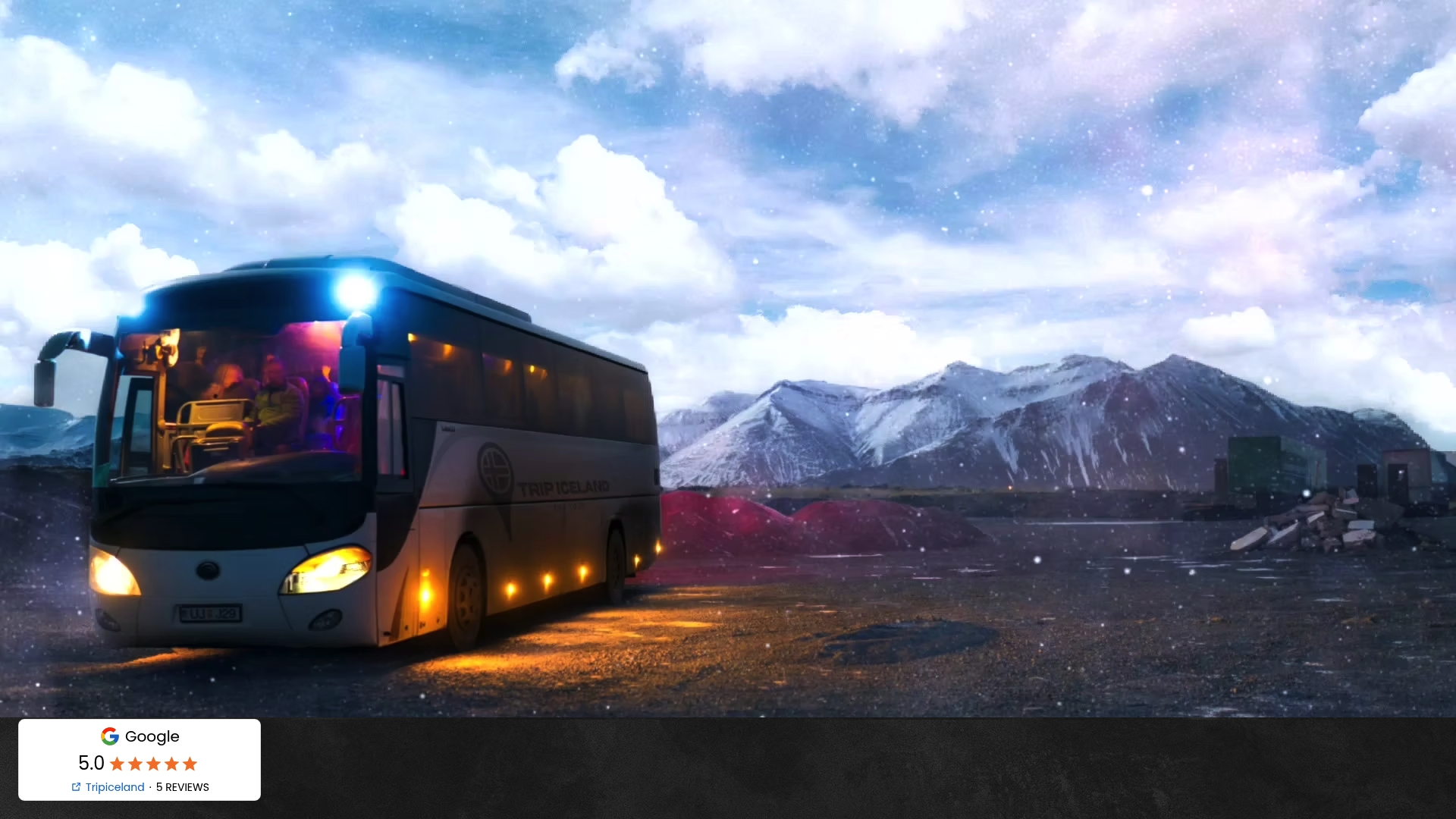
See our bus rental and group services or read how we handle corporate transportation in Iceland. If your team moves in a similar pattern to other large groups, our guide to sports team transport shows how we handle gear-heavy travel, and for Italian-speaking planners our corporate group logistics article is a good companion.
FAQ
How early should a film crew start planning transport in Iceland?
Start as soon as your locations and dates are roughly fixed, and certainly before you submit permit applications. Permits for protected areas can take up to 15 working days, or 30 for Mývatn and Laxá, and the application asks how equipment will be transported. Early transport planning keeps those answers consistent.
Can a crew drive ordinary rental cars to remote locations?
Not everywhere. Ordinary rental cars are not allowed or insured on F-roads, and off-road driving is forbidden. Check the access class of each location and plan the final approach according to the permit and road conditions.
When is the best season for road access?
Summer opens the most routes, because mountain F-roads often do not open until late June or early July. Winter brings ice, unpredictable weather and short daylight, so schedules need more buffer and live road checks. The right season depends on what your script needs.
What should I check each day on the road?
Check road conditions by calling 1777 or visiting Road.is, and check the weather forecast and any warnings from the Icelandic Meteorological Office. Do this the evening before and again in the morning, and confirm the plan with your driver.
Sources
Recommended


Comments