


Event Shuttle Scheduling in Iceland: A Planner's Guide


A good event shuttle schedule in Iceland starts from the event start time and works backward. You add loading time, a drive time that fits the season, and a buffer for weather. You then size the fleet for the exit peak, not the arrival. Do this and guests arrive calm, the venue opens on time and nobody waits in the dark at a hotel curb.
This guide is for event organizers, travel agents and corporate planners who book group transport in Iceland, including planners based in Italy who coordinate from afar. It covers the timetable logic, route and pickup choices, winter and summer realities, what to tell passengers, and a worked example you can adapt.
TL;DR
Work backward from the event start: guest arrival target, then drive time, then loading time, then a buffer.
Size vehicles for the exit peak. Departures bunch up far more than arrivals.
Add at least 30 minutes of extra buffer on any leg that has a hard deadline, such as a flight, and more in winter.
Check live road conditions on the official Icelandic road portal on the morning of the event, and keep a written plan B.
Send passengers one page with pickup times, locations, vehicle details and a driver contact number.
Table of Contents
Start with the event clock, not the bus clock
Most scheduling mistakes come from planning the bus first. Plan the guest experience first and let the vehicle follow.
Write down four fixed points: when doors open, when the program starts, when it ends, and when the last guest must be back at a hotel or the airport. Every departure time is derived from those four.
A simple backward formula for arrivals:
Doors open or program start (the fixed point).
Minus the time you want guests to be seated or settled, usually 15 to 20 minutes before the start.
Minus unloading time at the venue.
Minus the realistic drive time for the season and weather.
Minus loading time at the pickup point.
Minus a buffer.
We suggest 15 minutes of loading time per stop for groups, because people chat, collect coats and count heads. A buffer of 15 to 30 minutes on normal days is sensible. Raise it in winter, and for any trip with a flight at the end.
Worked example: a 120-person conference dinner near Reykjavík
Say a dinner starts at 19:00 and the venue is 25 minutes from the hotels by road. You have 120 guests in two hotels.
Step | Time |
Dinner starts | 19:00 |
Guests seated by | 18:45 |
Unload at venue | 18:30 to 18:45 |
Drive (normal conditions) | 18:05 to 18:30 |
Buffer | 17:50 to 18:05 |
Load at hotel (last bus leaves) | 17:35 to 17:50 |
So the last bus leaves the hotel at about 17:50 and loading starts around 17:35. Departing earlier in waves is better than one big wave: two buses at 17:30 and two at 17:50 smooth the venue entrance.
Size the fleet for the exit, not the arrival
Arrivals trickle in. Exits do not. When the last speech ends, everyone wants to leave at once, so event mobility planners advise that the exit is almost always more concentrated than the arrival, and that you should design for that peak.
In practice:
Count the exit window. If 200 guests leave within 20 minutes, you need seats for 200 across the vehicles departing in that window, or a shuttle loop that returns fast enough.
Choose between a loop and staged departures. A loop with two or three vehicles works when the route is short. For longer distances, staged departures at fixed times (22:00, 22:30, 23:00) are easier for guests to understand.
Keep a holding area. Vehicles that wait for the exit need legal, safe space close to the venue entrance, not a side street a kilometer away.
Match vehicle size to the group. One 50-seat coach is simpler to manage than three vans, but several smaller vehicles can reach narrow hotel streets and small venues. You can see the capacity range on our fleet page.
For trade fairs and conferences, where many people come and go all day, our guides to a conference shuttle service in Iceland and to trade show shuttles show how a continuous loop differs from a timed one.
Choosing routes and pickup points
Iceland’s geography shapes this more than most countries. Reykjavík is compact, but many events happen in the countryside, at hot springs, glacier lagoons, or in a hotel an hour or more from the capital. Choose pickups with these tests:
Can a coach actually stop there? Narrow downtown streets and pedestrian zones limit large vehicles. A hotel with a drop-off bay is better than a hotel on a one-way lane. Tell your driver the exact entrance.
Is it close to where guests already are? Consolidating five small guesthouses into one central pickup saves vehicles but costs guests a walk. In winter, keep the walk short and lit.
Is there shelter? A lobby is a better waiting spot than a curb, especially in wind and rain.
Is there a clear turning loop at the venue? Large coaches need room. Ask the venue before you finalize.
A good pickup list is short. Two or three well-chosen points beat eight scattered ones. If your group stays in several hotels, group them by area and give each group its own time.
If you plan stays for executives or project teams in the Nordics, scheduling executive stays around the event calendar also helps you cluster guests near one pickup point.
Weather, roads and daylight: the Iceland variable
This is the part that makes Iceland different from a schedule in Milan or Rome. Conditions change quickly, and the schedule must absorb that.
Check the official road portal on event day
The Icelandic Road and Coastal Administration runs a traffic centre that monitors road conditions 24 hours a day, 365 days a year, including closures caused by weather or natural events. Its information is published on umferdin.is and trafficinfo.is, in English as well as Icelandic. Build a habit: check in the morning, again two hours before the first departure, and assign one person on your team to own that check.

Winter service also has limits. Roughly 5,000 of the 12,000 km of classified highway is serviced in winter, and the portal shows how winter service is carried out on each road. If your route uses a secondary road, check what service it gets before you commit to a tight timetable. For a deeper look at closures, see when Iceland’s roads close.
Highland roads are a summer-only option
There are no year-round road connections across the highland interior. Those roads open only in the short summer and mainly serve tourism. If an event idea involves the interior, plan it for summer and confirm opening with the road authority.
Leave extra time on legs with a deadline
The operator of Keflavík Airport advises adding at least 30 minutes more buffer than you think you need on the return leg, and notes that weather can change quickly and the Reykjanes Peninsula is especially exposed to wind. Apply that to every event shuttle that ends at the airport. Close the last activity earlier than you would at home.
Daylight changes the whole timetable
In midsummer, daylight is almost endless and an evening transfer is easy. In midwinter, daylight is only a few hours, so late-afternoon sightseeing finishes in the dark and drivers face lower visibility. Schedule scenic stops in the middle of the day in winter, and move dinners and indoor activities to the evening. Our guide to winter excursions for groups shows how to fit this together.
Build a written plan B
A backup plan is part of the schedule, not an extra. Write down what happens in three situations and share it with your team before event day:
A vehicle problem. Who is called, and which spare vehicle or dispatcher takes over. Ask your operator how replacement works.
A traffic delay of more than 30 minutes. Who tells guests, and does the program start late or do guests join in progress?
A weather event. The trigger (for example, a closure on the official portal), the alternative route or timing, and who decides.
Name one decision-maker. When three people can change the plan, nobody does it quickly.
What to tell passengers
The schedule only works if guests understand it. Send one clear message, ideally the day before and again on the morning:
The pickup time, written as “be at the entrance by 17:30, the bus leaves at 17:40”.
The exact pickup spot, with a short description (“in front of the main entrance, white coach with the group name on the windshield”).
The return times, if there are several.
A phone number for the driver or the on-site coordinator.
What to bring in the season: warm layers, shoes for slippery ground, and the dress code for the venue.
What happens if someone misses the bus.
Keep it on one page, in the language your guests read. For international groups, a version in English and one in the guests’ own language works well. Use the local 24-hour clock throughout to avoid AM and PM confusion.
Notes for planners based in Italy
If you coordinate from Italy, a few practical points help:
Time zone. Iceland uses Greenwich Mean Time all year and does not change clocks, so the gap with Italy is one hour in winter and two hours in summer. State times in local Icelandic time in every message.
Documents. Confirm entry requirements for every traveler on official government pages before you finalize the manifest. Check each passport or ID against the travel dates.
Names and numbers. Give the operator a final head count and the flight arrival times as early as you can, so airport transfers can be matched to flights.
Seasonal expectations. Guests used to Italian winters should be told what an Icelandic winter transfer feels like: slower speeds, shorter days and the occasional change of plan.
For corporate groups, our group logistics guide in Italian covers the safety plan questions in your language.
Our perspective
We have seen the same pattern many times: the transport plan looks fine on paper, then a group of 80 people tries to leave a venue at once. Our advice is to give the schedule more room than feels necessary. Plan the fleet for the exit, put a real person at every pickup point, and treat the road portal as part of the timetable. A bus that leaves five minutes early with a calm group is better than a bus that leaves on the minute with a worried one. We also believe in flexibility. Our service covers small vans to large coaches, with custom itineraries, so the vehicle can fit the event rather than the event bending to the vehicle. Local drivers know which hotel entrances work for a coach, which stops are sheltered and how to adjust when conditions shift. That local knowledge is what turns a timetable into a smooth day. Malik
Book the shuttle with us
We provide bus and minibus rental with drivers for conferences, corporate outings, private events and airport transfers across Iceland. We build custom itineraries and match vehicle capacity to your group, from small vans to large coaches. Tell us your event time, the pickup points and your head count, and we will help you shape the schedule.
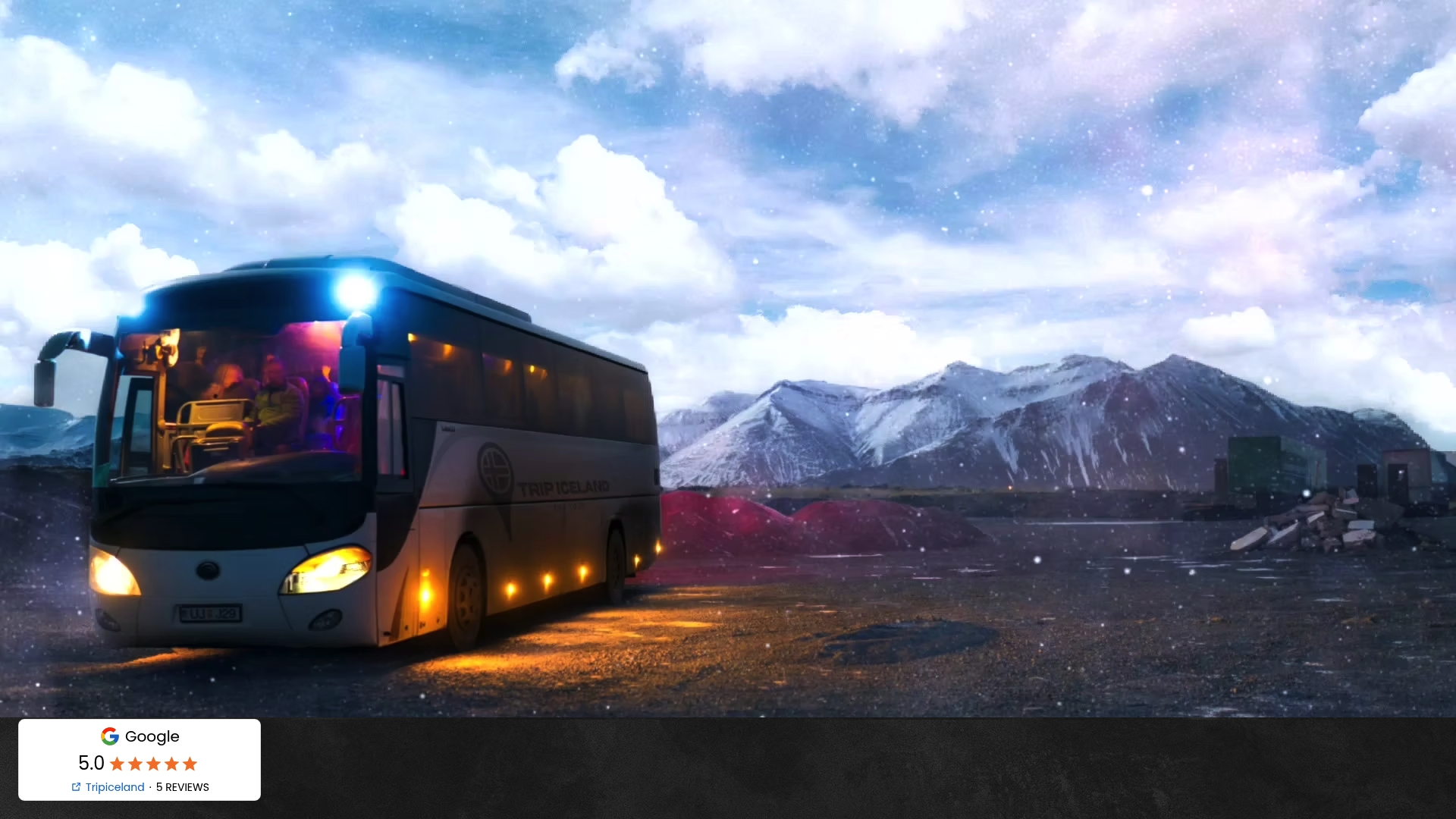
You can see the options on our bus rental and tour services page, and review the vehicles available. For more planning detail, read our corporate shuttle planning guide, our guide to bus rental for events across Iceland, or the guide to employee shuttle service in Iceland.
A one-page checklist
Before you confirm the booking, make sure you can answer yes to each:
Do I have the four fixed times (doors, start, end, last return)?
Is every departure derived from them, with loading time and a buffer?
Is the fleet sized for the exit peak?
Are pickup points reachable by a coach, sheltered and close to guests?
Is there a holding area at the venue?
Does someone own the morning road check?
Is there a written plan B with one decision-maker?
Do passengers have a one-page message with times, locations and a contact number?
Do airport legs have at least 30 extra minutes?
FAQ
How early should an event shuttle arrive before the start time?
Aim for guests to be at the venue and settled 15 to 20 minutes before the program starts. Then add loading time, drive time and a buffer of at least 15 minutes. In winter or on exposed roads, make the buffer longer.
How many shuttles do I need for an event in Iceland?
Count how many guests leave in the busiest 20 to 30 minutes and make sure you have seats for them, either in parallel or in a fast loop. Departures are usually more concentrated than arrivals, so plan for the exit. Tell us your head count and venue and we can suggest a vehicle mix.
Where can I check road conditions on the day?
Use the official Icelandic road portal, umferdin.is, run by the Road and Coastal Administration, which is available in English. Its traffic centre monitors conditions around the clock. Check it in the morning and again before the first departure.
Can I run highland routes for an event in winter?
No, highland roads through the interior are not open year-round and are limited to the short summer season. For winter events, choose routes on the serviced road network and confirm conditions on the day.
Sources
Recommended

Comments