


Conference Shuttle Planning in Reykjavík: A Planner's Guide


The most reliable way to move a conference group in Reykjavík is a dedicated, driver-operated bus or minibus on a schedule built around flight arrivals and session times, not a patchwork of public buses and taxis. Reykjavík is compact, but the airport sits about 45 to 50 minutes from the city, arrivals come in waves, and winter can change a plan overnight. We run bus and minibus rental with drivers in Iceland, from small vans to large coaches, and this guide gives you the routine we would follow: map the routes, size the vehicles, build the timetable, budget the costs and plan for weather.
TL;DR
Map three legs: Keflavík Airport to hotels, hotels to the venue, and venue to evening events. The airport leg is the longest, at roughly 45 to 50 minutes to the city centre.
Build the airport timetable from your attendees’ real flight arrival times, then group them into waves rather than running one shuttle per flight.
Match vehicle size to the group, with luggage counted separately from seats, and keep a smaller vehicle in reserve for stragglers.
Budget by route, schedule and vehicle, and ask for a written quote that covers every leg.
From November to March, add buffer time and follow the official road and weather information the morning of each transfer.
Table of Contents
Start with the map: three legs, not one
Planners often think of conference transport as “the airport transfer”. In practice it is three separate problems, each with a different rhythm.
Airport to accommodation. Peak demand, tied to flights, with luggage.
Accommodation to venue. Short, repeated, tied to the session start and end times.
Venue to dinners, receptions and excursions. Irregular, often evening, often in the dark for much of the year.
Draw all three on one page before you talk to any provider. Mark every hotel your attendees use, the venue, and any dinner locations. If you have one main hotel and one venue, you may only need a loop. If attendees are spread over several hotels, you need a pickup order, and that changes how long a morning run takes.
The airport leg
Keflavík Airport is the only international gateway most delegates will use. According to the ISTP 2025 conference travel page, scheduled airport coaches leave 35 to 45 minutes after each arrival and take roughly 45 to 50 minutes to reach central Reykjavík. The MARCE 2027 conference travel page gives a similar picture: about 45 minutes to the city centre, with departures 35 to 40 minutes after a flight lands.
Two planning conclusions follow. First, assume that a delegate who lands at a given time is at their hotel about two hours later once passport control, baggage and the drive are counted. Second, the scheduled coach is built for individual travelers, so a group of 30 arriving together on one flight gains nothing from it: they queue, split up and arrive at different times. A private coach waiting for the flight keeps the group together. We cover this in more detail in our guide to Reykjavik airport group transfer options.

The city leg
Inside Reykjavík, distances are short, but short does not mean simple. The MARCE page notes that the Hilton Reykjavik Nordica is about 2.7 km from the BSÍ bus terminal, a 35 to 40 minute walk. That is fine for a sightseeing stroll and wrong for a delegate in business clothes with a laptop bag and a 9:00 start.
If your venue is Harpa, the concert hall’s own transport page says it is only a few minutes’ walk from Lækjartorg, one of the city’s main public transport hubs. That makes the venue easy to reach for people who are staying in the centre. It does not solve the problem for hotels farther out, and it does nothing for groups arriving with equipment, banners or gifts.
Size the vehicles: seats, luggage and access
Vehicle choice is where many plans quietly fail. Count three things separately.
Seats. Take your confirmed headcount for each wave, not the total registration. A conference of 200 might send 60 people through the airport in the busiest two-hour window and 15 in the quietest. Plan vehicles for waves.
Luggage. Delegates for a multi-day conference usually travel with a full suitcase plus a carry-on, and some bring posters, display stands or product samples. A coach that seats a given number of people does not carry that number of full suitcases and passengers at the same time in every configuration, so ask about luggage space for your actual group when you request a quote. Tell the provider about any oversized items up front.

Access. Ask early whether anyone in your group needs step-free boarding, a seat near the door or extra time. Collect this on the registration form, not on the day. Vehicle features differ by type, so confirm the need against the exact vehicle in writing.
A useful rule is to match the number of vehicles to the number of waves, and to keep one smaller vehicle available for late arrivals, delayed flights and VIPs. Our fleet runs from small vans to large coaches, and you can see the range on our fleet page. For mid-sized groups, the 21 to 48 passenger option covers a lot of conference wave sizes in a single vehicle.
Group situation | What to plan | Why |
Under about 15 people, one flight | One minibus or van | Keeps the group together and avoids a half-empty large vehicle |
20 to 50 people, one or two flights | One mid-sized coach, or two vehicles | Gives luggage space and a fallback if one flight is late |
50 or more, many flights | Waves with several coaches plus a small standby vehicle | Prevents long waits at the airport |
Mixed arrivals across a day | Fixed airport meeting times, with a standby vehicle | Fewer empty runs and clear communication |
Build the timetable around flights and sessions
A shuttle timetable is a communication tool as much as a transport one. Delegates need to know where to stand and when, in a sentence.
Step 1: Collect arrival and departure details
Ask for flight numbers and times on the registration form, with a cut-off date. Add a field for the hotel. Export the data and sort by arrival time. You will see the waves immediately.
Step 2: Choose fixed meeting times
Pick three to six airport meeting times per day and assign each delegate to the nearest one. Build in the time needed to clear the airport: the coach schedules quoted above leave 35 to 45 minutes after landing, which is a reasonable minimum for your own wave rules too. A delegate whose flight lands at 14:10 can be told “meet at 15:00 at the arrivals hall” and that message is easier than a flight-by-flight timetable.
Step 3: Sync hotel runs to session times
Work backward from the first session. If the opening is at 9:00, the last hotel pickup should leave early enough to arrive at least 20 to 30 minutes before. For the closing session, run the shuttle slightly after the official end, not on the minute. Sessions overrun.
Step 4: Set pickup points that a bus can actually use
Coaches are large. A narrow hotel street, a one-way lane or a busy loading zone can force a pickup a block away. Confirm the exact point with your provider and describe it in plain words and with a map pin. A local operator who drives these streets daily will know which entrances work. That is a practical benefit of our local expertise in group coordination: we plan the route with the real streets in mind.
Step 5: Send one clear message
Send a single document, ideally one page, to delegates before travel: meeting times, meeting point at the airport, the name of the greeter or a sign, and a phone number that is answered. Repeat it by message the day before. On the day, appoint one person on your team to own the shuttle phone.
Step 6: Plan for the people who miss it
Some delegates will arrive on a different flight, miss the wave or land very late. Decide in advance what the fallback is, and tell them. The scheduled public route is one option: the Strætó route 55 timetable, valid from 2 January 2026, shows weekday departures from the airport through to the evening, with the last weekday arrival at BSÍ at 18:06. That tells you its limits: a delegate landing late in the evening will need a different plan, so keep your standby vehicle available for them.
How a dedicated shuttle compares with other options
It helps to know what a dedicated shuttle replaces, since your delegates will ask.
The ISTP 2025 page lays out the three usual routes from the airport: a scheduled airport coach, public transport and taxis. Taxis are available around the clock and take about 40 minutes straight to a hotel. A scheduled coach runs on its own timetable. Public transport can work for individuals on different flights.
What none of them does is move a group as a group. With a dedicated shuttle:
The group leaves together, so the first session starts with everyone present.
Luggage is loaded once, by a driver who has done it before.
The meeting point and timing are yours, not someone else’s timetable.
You can add a stop, such as a hotel drop before a venue, without renegotiating.
You have one contact to call if a flight changes.
For a few delegates on odd flights, individual arrangements will always be needed. For the main body of the group, a private coach is the simpler operation for your team.
Budget by route, schedule and vehicle
There is no single price per conference, because the cost follows your plan. These are the factors that move the quote:
Number of legs. Airport only, or airport plus daily venue runs plus evening events.
Number of waves. More arrival times mean more vehicle-hours.
Vehicle size. A small van and a large coach are priced differently.
Hours and waiting time. A coach waiting for a delayed flight or a long dinner is still working.
Time of day and season. Early, late and winter operations are planned differently.
We quote privately, by enquiry, so you receive a figure for your specific group and not a general rate. To get a quote you can compare line by line, send the same brief to every provider: dates, flight list, hotel names, venue, headcount per wave, luggage and accessibility needs, and any excursion. Ask for the quote to list each leg and each vehicle. Our guide on how to choose shuttle bus companies explains what to include in that brief.
For more on the wider logistics side, including how transport fits into registration, signage and attendee communication, this overview of conference transportation and logistics is useful alongside your transport plan.
Plan for weather and road conditions
Iceland’s weather changes fast, and winter conditions can affect timing, especially outside Reykjavík on the Keflavík road and on excursion routes. The planning response is simple: build slack, and use the official information.
The Icelandic Road and Coastal Administration runs a traffic centre that monitors road conditions 24 hours a day, every day of the year. It publishes updates on umferdin.is and trafficinfo.is, and its 1777 service gives information on road conditions, weather and travel conditions. Build a habit around it:
Check the road and weather information the evening before and again in the morning of each key transfer, especially the airport runs and any excursion.
Add buffer to the airport leg in winter. If a delegate must reach a morning session, do not plan an arrival on the same morning with no margin.
Keep an alternative for the excursion day: a shorter route, a changed order or a postponed departure.
Tell delegates in advance that timings can change, and that you will message them with updates.
Let your driver make the call. A professional driver who knows the road will tell you when conditions mean a change of plan.
A flight delay can be just as disruptive as snow. If you have the flight list, a coach waiting at the airport can hold for a late arrival, which a fixed scheduled service cannot do for you.
A checklist before you confirm
Headcount per wave, with flight numbers.
Hotel names and addresses, and confirmed pickup points.
Venue address and the drop-off point nearest the entrance.
Session start and end times for every day.
Luggage, equipment and accessibility needs.
A named contact on your side and on the provider’s side, with phone numbers.
A written plan for delayed flights and bad weather.
A single delegate message with times and meeting points.
Our view: plan the transport like a session
We treat conference transport as part of the program, not as something that happens around it. Delegates judge an event by its first hour, and for many of them that hour is the road from the airport. Our approach is to start from your flight list and your session schedule, then choose vehicles and meeting times to fit. We offer bus and minibus rental with drivers, from small vans to large coaches, and custom itinerary planning, so the same team can handle the airport transfers, the daily venue runs and an excursion day. We believe in reliable and flexible transportation, and in local expertise for efficient group coordination. For a conference that means one plan, one contact and a vehicle sized to the group, with a standby for the unexpected. Malik
Conference transport with Tripiceland
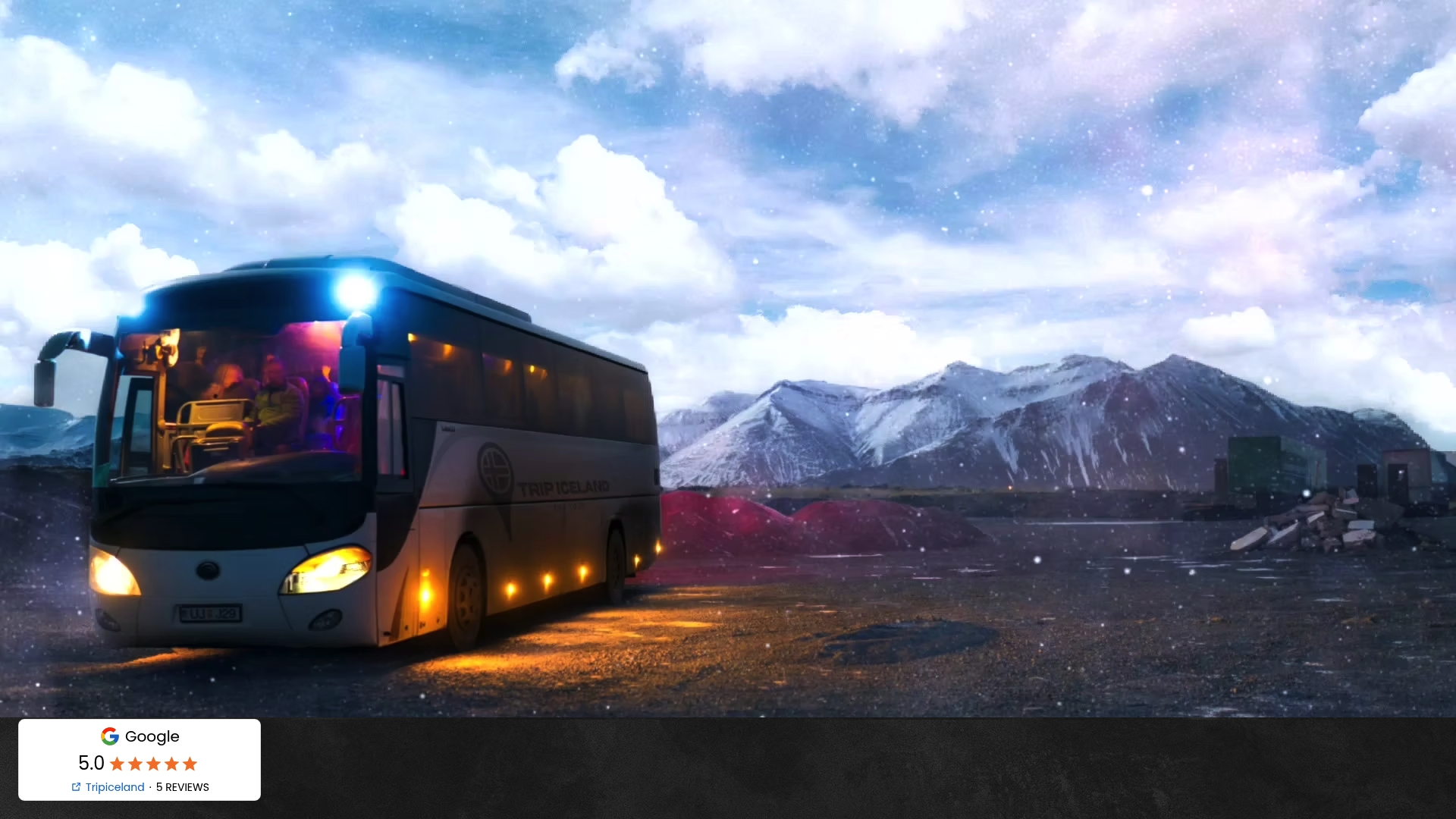
If you are organizing a conference, corporate event or incentive group in Reykjavík, our team can plan the whole transport program with you: airport transfers, hotel and venue shuttles, and event or excursion runs, with drivers and vehicles from vans to large coaches. See the details on our conference shuttle service for events page, and send us your dates, headcount and venues to start a quote through Tripiceland.
For related planning, see our guides to trade show shuttles in Iceland and group bus rental in Reykjavík.
FAQ
How early should I book conference shuttles in Reykjavík?
Book as soon as your dates and venue are confirmed, then finalize the flight-based schedule when registration closes. Early booking secures the vehicle sizes you need, and the schedule can be adjusted as flight details arrive. Send your provider an updated list at each registration milestone.
How long does the transfer from Keflavík Airport to Reykjavík take?
Plan for roughly 45 to 50 minutes by road to the city centre, according to conference travel information for events in the city. Add time for passport control and baggage before the coach leaves. Winter conditions can add time, so build in a margin.
Do I need a shuttle if the venue is walkable from the hotels?
For hotels in the centre near Harpa, delegates can often walk or use local buses. A shuttle still pays off for the airport legs, for hotels farther out, for evening events and for any day with heavy luggage or equipment. Many planners run a shuttle at the start and end of the day and leave the middle free.
How do I handle delegates arriving on different flights?
Group them into waves with fixed meeting times, and keep a smaller standby vehicle for late arrivals. Tell everyone the fallback in the pre-travel message. The wave approach keeps costs lower than meeting every single flight.
Sources
Recommended


Comments